


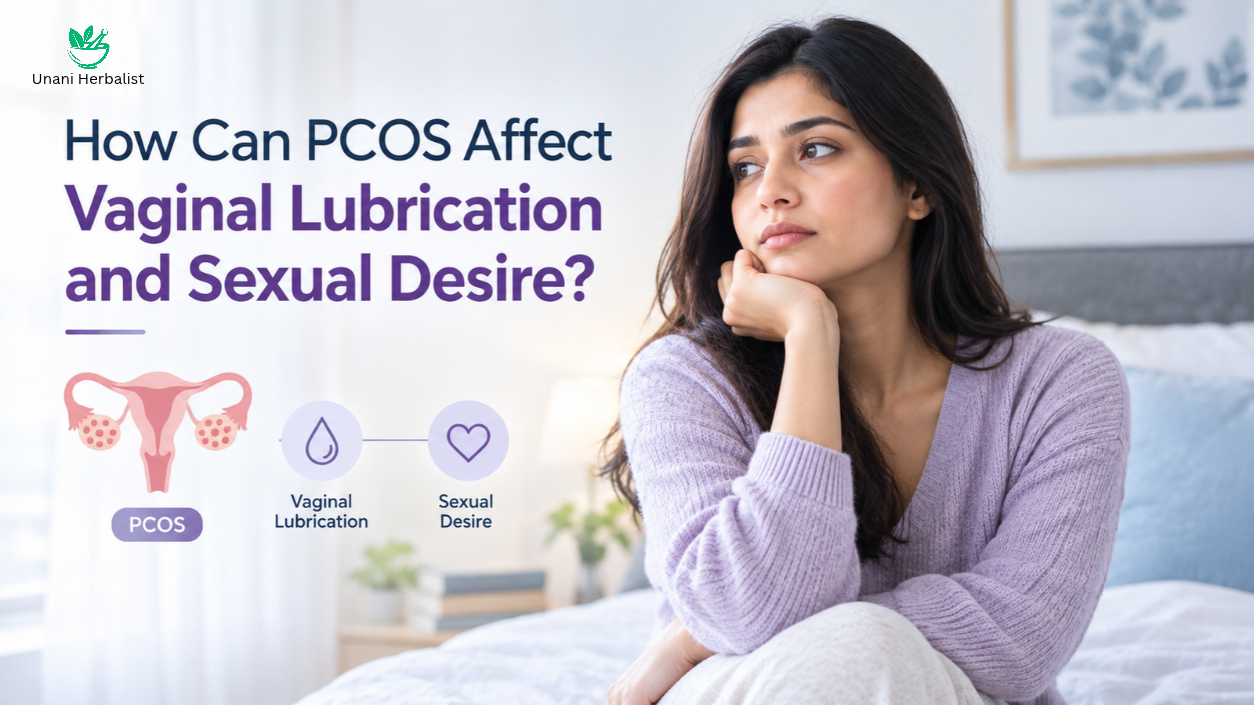

PCOS can affect more than your menstrual cycle. If you have polycystic ovary syndrome (PCOS), you may also notice changes in sexual desire, arousal or comfort during intimacy. However, these changes do not affect every woman, and PCOS is not automatically the cause of vaginal dryness or low libido.
Can PCOS Affect Vaginal Lubrication?
Vaginal lubrication is the natural moisture produced during sexual arousal. Some women with PCOS report reduced lubrication or difficulty becoming physically aroused. A 2024 systematic review in Human Reproduction Update found differences in sexual function, including lubrication, among women with PCOS, although the certainty of the evidence was low. Read the research in Human Reproduction Update.
PCOS does not necessarily reduce vaginal moisture directly. Stress, insufficient arousal, certain medications and other hormonal conditions may also contribute to vaginal dryness. Cleveland Clinic.
Why Can PCOS Affect Sexual Desire?
1. Hormonal Changes
PCOS involves hormonal imbalances, including elevated androgen levels in some women. However, these hormone levels alone cannot reliably predict sexual desire or physical arousal. World Health Organization.
2. Body Image and Self-Confidence
Acne, excess facial hair and changes in weight can affect body confidence. If these changes cause distress, they may influence how comfortable you feel during intimacy.
3. Stress and Emotional Well-Being
Managing a long-term condition can contribute to stress, anxiety or low mood. These factors may reduce sexual interest or make it harder to feel relaxed during intimacy. Cleveland Clinic.
How Can You Improve Vaginal Lubrication and Sexual Desire?
- Allow time for arousal: Comfortable, unhurried intimacy may help your body produce natural lubrication.
- Use a suitable lubricant: Water-based or silicone-based lubricants can reduce friction and discomfort during sex.
- Support emotional well-being: Managing stress and discussing concerns with a trusted partner may help.
- Manage PCOS with medical guidance: A healthcare professional can assess your symptoms and discuss appropriate treatment options.
These steps may improve comfort, but persistent symptoms deserve an individual assessment.
When Should You Consult a Doctor?
Consult a gynaecologist if vaginal dryness persists, sex becomes painful, or reduced sexual desire causes distress. Your doctor can assess possible causes, including PCOS-related concerns, medication effects and other hormonal or vaginal conditions.
You can also consider a free 1-on-1 consultation with our experienced sexual health expert to discuss your sexual health concerns confidentially and understand what support may be appropriate.
Final Thoughts
PCOS may be linked with changes in vaginal lubrication, arousal and sexual desire, but the relationship varies from woman to woman. Understanding your symptoms and identifying their actual cause can help you find suitable treatment and feel more comfortable with intimacy.
Frequently Asked Questions
1. Can PCOS cause vaginal dryness?
PCOS can be associated with changes in sexual function, but vaginal dryness is not an inevitable symptom. Stress, medications and other hormonal conditions may also contribute.
2. Does PCOS reduce sexual desire?
Some women with PCOS experience reduced libido, while others notice no change. Emotional well-being, body image and hormonal factors may influence sexual desire.
3. How can I improve lubrication with PCOS?
Allow enough time for arousal and consider a water-based or silicone-based lubricant. Consult a gynaecologist if dryness persists or intimacy becomes painful.
4. Can treating PCOS improve sexual desire?
Managing PCOS symptoms may improve overall well-being, but changes in sexual desire depend on the underlying causes and individual circumstances.